Allah SWT menegaskan dalam firman-Nya, Katakanlah (Muhammad),
‘Seandainya lautan menjadi tinta untuk (menulis) kalimat-kalimat Tuhanku, maka pasti habislah lautan itu sebelum selesai (penulisan) kalimat-kalimat Tuhanku,
meskipun Kami datangkan tambahan sebanyak itu (pula)
(Al-Kahfi:109).
Showing posts with label Ibnu Haiyyan. Show all posts

Tuesday, 25 March 2014

Inventions in the Islamic World


Islamic Astronomy: Astronomical instruments

Muslim astronomers developed a number of astronomical instruments, including several variations of the astrolabe, originally invented by Hipparchus in the 2nd century BCE, but with considerable improvements made to the device in the Muslim world. These instruments were used by Muslims for a variety of purposes related to astronomy, astrology, horoscopes, navigation, surveying, timekeeping, Qibla, Salah, etc.

Astrolabes
Brass astrolabe by Muhammad al-Fazari in the 8th century.
Earliest surviving astrolabe in 315 AH (927-928 CE).
Mechanical geared astrolabe by Ibn Samh (c. 1020).
Navigational astrolabe was invented in the Islamic world. It employed the use of a polar projection system.
In the 10th century, al-Sufi first described over 1000 different uses of an astrolabe, including uses in astronomy, astrology, horoscopes, navigation, surveying, timekeeping, Qibla, Salah, etc.
Orthographical astrolabe by Abu Rayhan al-Biruni in the 11th century.
Saphaea, a universal astrolabe for all latitudes, by Abu Ishaq Ibrahim al-Zarqali (Arzachel) in 11th century Islamic Spain.
Zuraqi, a heliocentric astrolabe where the Earth is in motion rather than the sky, by al-Sijzi in the 11th century.
Linear astrolabe ("staff of al-Tusi") by Sharaf al-Din al-Tusi in the 12th century.

Analog Machines (or Computers)
Equatorium by Abu Ishaq Ibrahim al-Zarqali (Arzachel) in Islamic Spain circa 1015.
Planisphere by Abu Rayhan al-Biruni in the 11th century.
Mechanical lunisolar calendar computer with gear train and gear-wheels by Abu Rayhan al-Biruni.
Fixed-wired knowledge processing machine by Abu Rayhan al-Biruni.
Mechanical astrolabe with calendar computer and gear-wheels by Abi Bakr of Isfahan in 1235.
Oldest surviving complete mechanical geared machine by Abi Bakr of Isfahan in 1235.
The Plate of Conjunctions, a computing instrument used to determine the time of day at which planetary conjunctions will occur,and for performing linear interpolation, invented by al-Kashi in the 15th century.
A mechanical planetary computer called the Plate of Zones, which could graphically solve a number of planetary problems, invented by al-Kashi in the 15th century. It could predict the true positions in longitude of the Sun and Moon, and the planets in terms of elliptical orbits;the latitudes of the Sun, Moon, and planets; and the ecliptic of the Sun. The instrument also incorporated an alhidade and ruler.

 Armillary spheres
Several different types of armillary spheres.
Celestial globes which could calculate the altitude of the Sun and the right ascension and declination of the stars in the 11th century.
The spherical astrolabe was first produced in the Islamic world by the 14th century.

 Mural instruments
The first quadrants and mural instruments by al-Khwarizmi in 9th century Baghdad, Iraq.
Sine quadrant for astronomical calculations by al-Khwarizmi in 9th century Baghdad.
Horary quadrant for specific latitudes by al-Khwarizmi in 9th century Baghdad.
The Quadrans Vetus, a universal horary quadrant which could be used for any latitude and at any time of the year to determine the time, as well as the times of Salah, invented by al-Khwarizmi in 9th century Baghdad. This was the second most widely used astronomical instrument during the Middle Ages after the astrolabe.
The Quadrans Novus, an astrolabic quadrant invented in Egypt in the 11th century or 12th century, and later known in Europe as the "Quadrans Vetus" (New Quadrant).
Almucantar quadrant, invented in the medieval Islamic world. It employed the use of trigonometry. The term "almucantar" is itself derived from Arabic.
Astronomical sextant by Abu-Mahmud al-Khujandi in Ray, Iran in 994.

Other instruments
Alhidade (the term "alhidade" is itself derived from Arabic).
Shadow square, an instrument used to determine the linear height of an object, in conjunction with the alidade for angular observations, invented by Muhammad ibn Musa al-Khwarizmi in 9th century Baghdad.
Highly accurate astronomical clocks.
Astrometric device in Islamic Spain around 1015.
Star chart by Abu Rayhan al-Biruni in the 11th century.

 Aviation Technology

 Parachute
In 9th century Islamic Spain, Abbas Ibn Firnas (Armen Firnas) invented a primitive version of the parachute. John H. Lienhard described it in The Engines of Our Ingenuity as follows:

"In 852, a new Caliph and a bizarre experiment: A daredevil named Armen Firman decided to fly off a tower in Cordova. He glided back to earth, using a huge winglike cloak to break his fall. He survived with minor injuries, and the young Ibn Firnas was there to see it."

Hang glider
Shortly afterwards, Abbas Ibn Firnas built the first hang glider, which may have also been the first manned glider. Knowledge of Firman and Firnas' flying machines spread to other parts of Europe from Arabic references.

According to Philip Hitti in History of the Arabs:
"Ibn Firnas was the first man in history to make a scientific attempt at flying."


 Flight controls
Abbas Ibn Firnas was the first to make an attempt at controlled flight. He manuipulated the flight controls of his hang glider using two sets of artificial wings to adjust his altitude and to change his direction. He successfully returned to where he had lifted off from, but his landing was unsuccessful.


Artificial wings
Ibn Firnas' hang glider was the first to have artificial wings, though the flight was eventually unsuccessful. According to Evliya Çelebi in the 17th century, Hezarfen Ahmet Celebi was the first aviator to have made a successful flight with artificial wings between 1630-1632.


Artificially-powered manned rocket
According to Evliya Çelebi in the 17th century, Lagari Hasan Çelebi launched himself in the air in a seven-winged rocket, which was composed of a large cage with a conical top filled with gunpowder. The flight was accomplished as a part of celebrations performed for the birth of Ottoman Emperor Murad IV's daughter in 1633. Evliya reported that Lagari made a soft landing in the Bosporus by using the wings attached to his body as a parachute after the gunpowder was consumed, foreshadowing the sea-landing methods of astronauts with parachutes after their voyages into outer space. Lagari's flight was estimated to have lasted about twenty seconds and the maximum height reached was around 300 metres. This was the first known example of a manned rocket and an artificially-powered aircraft.

Astronautics and space exploration
In the 20th century, Muslim rocket scientists from Soviet Central Asia were involved in research on astronautics and space exploration. Kerim Kerimov from Azerbaijan was one of the most important key figures in early space exploration. He was one of the founders of the Soviet space program, one of the lead architects behind the first human spaceflight (Vostok 1), and responsible for the launch of the first space stations (the Salyut and Mir series) as well as their predecessors (the Cosmos 186 and Cosmos 188).


 Camera technology

Ibn al-Haytham (Alhazen), the "father of optics" and pioneer of the modern scientific method, invented the camera obscura and pinhole camera.
In ancient times, Euclid and Ptolemy believed that the eyes emitted rays which enabled us to see. The first person to realise that rays of light enters the eye, rather than leaving it, was the 10th century Muslim mathematician, astronomer and physicist Ibn al-Haytham (Alhazen), who is regarded as the "father of optics".He is also credited with being the first man to shift physics from a philosophical activity to an experimental one, with his development of the scientific method. The word "camera" comes from the Arabic word qamara for a dark or private room.

Pinhole camera
Ibn al-Haytham first described pinhole camera after noticing the way light came through a hole in window shutters.[39]


 Camera obscura
Ibn al-Haytham worked out that the smaller the hole, the better the picture, and set up the first camera obscura, a precursor to the modern camera.

Chemical technology
Jabir ibn Hayyan (Geber), the father of chemistry, invented the alembic still and many chemicals, including distilled alcohol, and established the perfume industry.
Early forms of distillation were known to the Babylonians, Greeks and Egyptians since ancient times, but it was Muslim chemists who first invented pure distillation processes which could fully purify chemical substances. They also developed several different variations of distillation (such as dry distillation, destructive distillation and steam distillation) and introduced new distillation aparatus (such as the alembic, still, and retort), and invented a variety of new chemical processes and over 2,000 chemical substances.


 Chemical processes
Geber first invented the following chemical processes in the 8th century:
Pure distillation (al-taqtir) which could fully purify chemical substances with the alembic.
 

Filtration (al-tarshih)
Liquefaction, crystallization (al-tabalwur), purification, oxidisation, and evaporation (tabkhir).


Al-Razi invented the following chemical processes in the 9th century:
Dry distillation
Calcination (al-tashwiya).
Solution (al-tahlil), sublimation (al-tas'id), amalgamation (al-talghim), ceration (al-tashmi), and a method of converting a substance into a thick paste or fusible solid.
Other chemical processes introduced by Muslim chemists include:

Assation (or roasting), cocotion (or digestion), ceration, lavage, solution, mixture, and fixation.
Destructive distillation was invented by Muslim chemists in the 8th century to produce tar from petroleum.
Steam distillation was invented by Avicenna in the early 11th century for the purpose of producing essential oils.
Water purification 


Ahmad Y Hassan wrote:
"The distillation of wine and the properties of alcohol were known to Islamic chemists from the eighth century. The prohibition of wine in Islam did not mean that wine was not produced or consumed or that Arab alchemists did not subject it to their distillation processes. Jabir ibn Hayyan described a cooling technique which can be applied to the distillation of alcohol."

Laboratory apparatus
Alembic and still by Jabir ibn Hayyan (Geber) in the 9th century.
Retort by Jabir ibn Hayyan.
Thermometer and air thermometer by Abu Ali ibn Sina (Avicenna) in the 11th century.
Conical measure by Abu Rayhan al-Biruni in the 11th century.
Laboratory flask and pycnometer by Abu Rayhan al-Biruni.
Hydrostatic balance and steelyard by al-Khazini in 1121.
Muslim chemists and engineers invented the cucurbit and aludel, and the equipment needed for melting metals such as furnaces and crucibles.
Al-Razi (Rhazes), in his Secretum secretorum (Latinized title), first described the following tools for melting substances (li-tadhwib): hearth (kur), bellows (minfakh aw ziqq), crucible (bawtaqa), the but bar but (in Arabic) or botus barbatus (in Latin), tongs (masik aq kalbatan), scissors (miqta), hammer (mukassir), file (mibrad).
Al-Razi also first described the following tools for the preparation of drugs (li-tadbir al-aqaqir): cucurbit and still with evacuation tube (qar aq anbiq dhu-khatm), receiving matras (qabila), blind still (without evacuation tube) (al-anbiq al-ama), aludel (al-uthal), goblets (qadah), flasks (qarura or quwarir), rosewater flasks (ma wariyya), cauldron (marjal aw tanjir), earthenware pots varnished on the inside with their lids (qudur aq tanjir), water bath or sand bath (qadr), oven (al-tannur in Arabic, athanor in Latin), small cylindirical oven for heating aludel (mustawqid), funnels, sieves, filters, etc.

 Chemical industries
Chemical substances invented for use in the chemical industries include:

Sulfuric acid, originally coined as oil of vitriol when it was discovered by Jabir ibn Hayyan.
The mineral acids: nitric acid, sulfuric acid, and hydrochloric acid, by Geber.
Pure distilled alcohol (ethanol) by Jabir ibn Hayyan in the 8th century.
Uric acid and nitric acid by Jabir ibn Hayyan (Geber) in the 8th century.
Lustreware, by Geber in the 8th century.
Artificial pearl, purified pearl, dyed pearl, dyed gemstones, cheese glue, and plated mail, by Geber.
Kerosene and kerosene lamp by al-Razi in the 9th century.
Petrol by Muslim chemists.
Tar in the 8th century, and Naphtha in the 9th century.
Medicinal alcohol in the 10th century.
Essential oil by Abu Ali ibn Sina (Avicenna) in the 11th century.
Hygienic cosmetics by Muslim chemists.
Dyestuff by Muslim chemists.
Arsenic, alkali, alkali salt, rice vinegar, boraxes, potassium nitrate, sulfur and purified sal ammoniac by Geber.
Sal nitrum and vitriol by al-Razi.
Ethanol, sulfuric acid, ammonia, mercury, camphor, pomades, and syrups.
Lead carbonatic, arsenic, and antimony.
Nitric and sulfuric acids, alkali, the salts of mercury, antimony, and bismuth.
Aqua regia, alum, sal ammoniac, stones, sulfur, salts, and spirits of mercury.
At least 2,000 medicinal substances.
The classification of all seven classical metals: gold, silver, tin, lead, mercury, iron, and copper, by Geber.


sumber dari: http://metaexistence.org/inventions.htm

Thursday, 20 March 2014

Father of modern chemistry


Jaber ibn Haiyan, disciple of the sixth Imam Ja'afar-i-Sadeq, became known world-wide as "the Father of Chemistry" and of Arab alchemy. His influence on Western chemistry and alchemy was profound and long lasting. Some hundred of his works survive. Of him the late Sayyid Hebbat-ud-Din Shahristani of Kadhemain, once Iraq's Minister of Education, writes: "I have seen some 50 ancient MSS of works of Jaber all dedicated to his master the Imam Ja'afar. More than 500 of his works have been put into print and are for the most part to be found among the treasures of the National Libraries of Paris and Berlin, while the savants of Europe nickname him affectionately 'Wisdom's Professor' and attribute to him the discovery of 19 of the elements with their specific weights, etc. Jaber says all can be traced back to a simple basic particle composed of a charge of lightning (electricity) and fire, the atom, or smallest indivisible unit of matter, very close to modern atomic science."

The blending of colouring matters, dyeing, extraction of minerals and metals, steelmaking, tanning, were amongst industrial techniques of which the Muslims were early masters. They produced Nitric Acid, Sulphuric Acid, Nitro-glycerine Hydrochloric Acid, Potassium, Aqua , Nitrate, Sulphuric Chloride, Potassium Ammonia, Sal Ammoniac, Silver Nitrate, Alcohol, Alkali (both still known by their Arabic names), Orpiment (yellow tri-sulphide of arsenic: arsenic is derived from the Persian zar = gold, adjective zarnee = golden, Arabised with article "al" to "al-zernee" pronounced "azzernee" and so taken into Greek where it was turned to the recognisable word "arsenikon" which means "masculine" since the gold colour was supposed to link it with the sun, a masculine diety!): and finally - though this does not close the list we might cite-Borax, also an Arabic word booraq. Further, the arts of distilling, evaporation, sublimation, and the use of Sodium, Carbon, Potassium Carbonate, Chloride, and Ammonium were common under the Abbasid Caliphate.


sumber dari: http://mujahidsufi.blogspot.com/

"30 Books and Letters by Jabir ben Hayan"


sumber dari: http://www.alkitab.com/10847.html

Arabic Medieval Alchemy


A big part of the development of Alchemy originated in Islam. The word alchemy came from the Arabic word al-kimia, which came from the Persian word kimia. Will Durrant quotes in his book The Story of Civilization IV: The Age of Faith,

“Chemistry as a science was almost created by the Moslems; for in this field, where the Greeks (so far as we know) were confined to industrial experience and vague hypothesis, the Saracens introduced precise observation, controlled experiment, and careful records. They invented and named the alembic (al-anbiq), chemically analyzed innumerable substances, composed lapidaries, distinguished alkalis and acids, investigated their affinities, studied and manufactured hundreds of drugs. Alchemy, which the Moslems inherited from Egypt, contributed to chemistry by a thousand incidental discoveries, and by its method, which was the most scientific of all medieval operations.”


Alchemy poster


Alchemy Section from the Elusive Atom poster

There are many Islamic figures in chemistry, and they often aren’t as acknowledged as they should be. Early Islamic chemists such as Jabir ibn Hayyan, Al-Kindi and Al-Razi made important chemical breakthroughs such as perfumery; distillation apparatus; muriatic, nitric, acetic and sulfuric acids; purified distilled alcohol, soda and potash; and filtration.

Jabir understood the importance of experimentation. Jabir created the alembic when he discovered how to complete the process of distillation. Jabir’s teacher, Ja’far al-Sadiq, refuted Aristotle’s theory of four elements by saying “I wonder how a man like Aristotle could say that in the world there are only four elements – Earth, Water, Fire, and Air. The Earth is not an element. It contains many elements. Each metal, which is in the earth, is an element.”

Another influential Muslim chemist was al-Razi. Al-Razi was the first to distill petroleum, invent kerosene and lamps for it, invent soap bars and recipes for soap, make antiseptics, and developed many chemical processes like sublimation.

In addition to all other contributions, Muslim alchemists developed theories on the possibility of the transmutation of metals, the philosopher’s stone, and creating artificial life in laboratories, as in later medieval European alchemy, though these theories were eventually discredited and rejected by practical Muslim chemists from the 9th century thereon. Therefore, medieval Arabic alchemy was the biggest contributor to Alchemy and Chemistry as we know it today.


sumber dari: http://elementsunearthed.com/tag/ibn-hayyan/

resistant to diseases


Jabir Bin Hayyan proved resistant to diseases.It is repeatedly blooming . Outstanding bloom shape with beautiful lavender color. Its flowers are not fragrant. It is bred at Pattoki Pakistan.


Image


sumber dari: http://www.gardeningpakistan.com/viewtopic.php?f=77&t=3051

Bapak Kimia Modern


Subhanallah, dari begitu banyak ilmuwan kimia di dunia saat ini ternyata yang pertama kali menemukan dan mengembangkan tentang keilmuan kimia adalah seorang muslim. Beliau adalah Abu Musa Jabir bin Hayyan atau sering dikenal dengan Jabir Ibn Hayyan atau orang barat menyebutnya Geber (keturunan Arab, walaupun sebagian orang menyebutnya keturunan Persia), merupakan seorang muslim yang ahli dibidang kimia, farmasi, fisika, filosofi dan astronomi.

Jabir Ibn Hayyan (yang hidup di abad ke-7) telah mampu mengubah persepsi tentang berbagai kejadian alam yang pada saat itu dianggap sebagai sesuatu yang tidak dapat diprediksi, menjadi suatu ilmu sains yang dapat dimengerti dan dipelajari oleh manusia. Beliau adalah seorang tokoh besar yang dikenal sebagai “the father of modern chemistry”. Penemuan-penemuannya di bidang kimia telah menjadi landasan dasar untuk berkembangnya ilmu kimia dan tehnik kimia modern saat ini. Jabir Ibn Hayyan-lah yang menemukan asam klorida, asam nitrat, asam sitrat, asam asetat, tehnik distilasi dan tehnik kristalisasi. Dia juga yang menemukan larutan aqua regia (dengan menggabungkan asam klorida dan asam nitrat) untuk melarutkan emas.

Jabir Ibn Hayyan mampu mengaplikasikan pengetahuannya di bidang kimia kedalam proses pembuatan besi dan logam lainnya, serta pencegahan karat. Dia jugalah yang pertama mengaplikasikan penggunaan mangan dioksida pada pembuatan gelas kaca.

Jabir Ibn Hayyan juga pertama kali mencatat tentang pemanasan wine akan menimbulkan gas yang mudah terbakar. Hal inilah yang kemudian memberikan jalan bagi Al-Razi untuk menemukan etanol.
Jika kita mengetahui kelompok metal dan non-metal dalam penggolongan kelompok senyawa, maka lihatlah apa yang pertamakali dilakukan oleh Jabir. Dia mengajukan tiga kelompok senyawa berikut :

1) “Spirits“ yang menguap ketika dipanaskan, seperti camphor, arsen dan amonium klorida.
2) “Metals” seperti emas, perak, timbal, tembaga dan besi; dan
3) “Stones” yang dapat dikonversi menjadi bentuk serbuk.

Salah satu pernyataannya yang paling terkenal adalah: “The first essential in chemistry, is that you should perform practical work and conduct experiments, for he who performs not practical work nor makes experiments will never attain the least degree of mastery.”

Pada abad pertengahan, penelitian-penelitian Jabir tentang Alchemy diterjemahkan kedalam bahasa Latin, dan menjadi textbook standar untuk para ahli kimia eropa. Beberapa diantaranya adalah Kitab al-Kimya (diterjemahkan oleh Robert of Chester – 1144) dan Kitab al-Sab’een (diterjemahkan oleh Gerard of Cremona – 1187). Beberapa tulisa Jabir juga diterjemahkan oleh Marcelin Berthelot kedalam beberapa buku berjudul: Book of the Kingdom, Book of the Balances dan Book of Eastern Mercury. Beberapa istilah tehnik yang ditemukan dan digunakan oleh Jabir juga telah menjadi bagian dari kosakata ilmiah di dunia internasional, seperti istilah “Alkali”, dsb.


sumber dari: http://himamia.mipa.uns.ac.id/

”Bapak Kimia” dan Ahli Praktik Medis dan Ilmu Kedokteran


Beliau mempunyai nama lengkap Abu Musa Jabir ibn Hayyan. Di daratan Eropa dan barat, beliau lebih dikenal dengan nama Geber. Jabir ibn Hayyan dilahirkan di Tus, Iran pada tahun 721 M dan meninggal di Kufah, Iraq tahun 815 M. Beberapa guru yang telah mendidik beliau diantaranya adalah Imam Ja`far Sadiq dan Khalifah Khalid ibn Yazid Bani Umayyah. Beliau masyhur dalam sejarah Islam dan barat sebagai ”bapak kimia” dan ahli praktik medis dan ilmu kedokteran.

Peran terbesar Jabir ibn Hayyan di bidang kimia adalah dengan memperkenalkan sebuah metode baru ”pendekatan ekperimen” dan laboratorium sebagai tempat eksperimen. Melalui metode ini, beliau telah mengubah ”ilmu kimia klasik” menjadi ilmu kimia modern. Terkait dengan peran penting eksperimen, ibn Hayyan berkata ”hal pertama yang paling penting dalam kimia adalah anda harus melakukan kerja praktik dan eksperimen. Seorang ilmuwan yang tidak melakukan kerja praktik atau eksperimen, maka dia tidak akan pernah mencapai puncak profesionalitas dalam bidangnya. Wahai anakku, lakukan eksperimen sehingga kamu akan menyerap dan menguasai ilmu pengetahuan secara sempurna. Seorang ilmuwan mencapai titik kesenangan dan kepuasan bukan karena melimpahnya kekayaan yang dimiliki, namun ilmuwan mencapai puncak kebahagiaannya karena cerdas dalam metode eksperimennya.”

Jabir ibn Hayyan telah mencurahkan usahanya untuk mengembangkan metode-metode dasar dalam ilmu kimia dan mempelajari berbagai mekanisme reaksi kimia. Dengan usahanya tersebut, beliau telah memberi sumbangan besar terhadap evolusi ilmu kimia menjadi ilmu kimia modern. Jabir juga menekankan bahwa kuantitas berbagai jenis bahan tertentu terlibat dalam suatu reaksi kimia. Oleh karena itu, dapat dikatakan bahwa beliau telah membuka jalan dalam meletakkan dasar hukum konstanta keseimbangan.

Beberapa prestasi besar di bidang kimia yang dilahirkan oleh Jabir ibn Hayyan adalah penemuan mineral dan berbagai senyawa-senyawa asam. Selain itu, beliau juga telah mengembangkan aplikasi proses kimia, yang kemudian menjadi pionir di bidang aplikasi sains. Hasil pengembangan aplikasi proses kimia diantaranya adalah preparasi beberapa metal, pengembangan baja, penggunaan manganese dioksida dalam pembuatan gelas, pencegahan karat, penulisan karakter di logam emas, identifikasi paints, grease dan lain-lain. 

Selain itu, beliau juga mengembangkan aqua regia untuk melarutkan emas. Kontribusi lain yang dihasilkan beliau diantaranya adalah dengan memberikan sumbangan teknik-teknik saintifik seperti kristalisasi, distilasi, kalsinasi, sublimasi dan penguapan, dan pengembangan beberapa instrumen dan peralatan eksperimen yang berkaitan dengan berbagai teknik tersebut. Jabir ibn Hayyan telah menyumbangkan penemuan dan pengembangan beberapa instrumentasi laboratorium yang masih digunakan sampai hari ini seperti gelas alembic yang digunakan untuk proses distilasi menjadi lebih mudah, aman dan efisien. Melalui distilasi dari berbagai garam dengan asam sulfur, beliau telah menemukan asam hidroklorik dan asam nitrat. Beliau juga telah sukses membuat skala yang mempunyai ketelitian sangat tinggi sekitar 1/6480 kilogram.


sumber dari: http://tanbihun.com/pendidikan/

Alchemy in the Middle East


Jabir Ibn Hayyan Greeting Cards - Geber, Arab Polymath Greeting Card by Science Source


I have always been fascinated by the history of alchemy, especially in connection to the Middle East: from its conception, its development from Ancient Egyptian times, to the early Islamic world and finally its decline in the 12th century onwards. What has particularly amused me, in my studies of alchemy, has been people's ideas of the science which focuses primarily on an archaic image of magic and potions. A time in which wizards and practisers' of magic would toil over bubbling cauldrons, in an attempt to change metals of lesser value into precious gold, while living in secrecy.

This, however, is a rather misconceived image. Although, there were a minority of alchemists who stirred their cauldrons, the reality is very different. For instance, many alchemists were also infamous scientists and respected theologians, who are still respected today in the East and the West. And, although, alchemy can involve transmutation: the change from one substance into another, it is not the sole purpose of alchemy, with transmuting only representing a small segment of the science.

The word "Alchemy" roughly translates into "Chemistry" in Arabic: its origins springing from the word "Al-kimya".1 Some believe that "Kimya", comes from the archaic Egyptian word "Kemi"2 meaning black. However, others believes it's originates from ancient Greek, from the word "Khymeia" meaning "fusion": referring to the Ancient Greeks practice of chemical transmutation. Alchemy itself is composed of many different sciences such as chemistry, physics, metallurgy and even astrology. In many ways, alchemy is a way of understanding the natural world around us: from both a scientific and mystical view.

Alchemy's history in the Middle East

Alchemy can trace its history as far back as Ancient Egypt and the worshiping of ancient Egyptian Gods. The Egyptian god Djehuty, has been attributed with the creation of Ancient Egyptian alchemy through the god's composition of the Emerald Tablets. The Emerald Tablets were a set of mythical texts, which were believed to contain occult knowledge; such as secret formulas for alchemical transmutation. Alchemy in Egypt played a major role in everyday life, and especially with the cult of the dead and mummification, all forms of Egyptian alchemy.

However, it is the development of the art of alchemy in the early Islamic world, which has fascinated me the most, especially since learning more about orthodox Islam, which forbids many alchemic practices. Through the spread of Islam in 7th and 8th centuries, the early Islamic community quickly absorbed other local traditions and cultures including alchemic practice.

From the rule of the Roman Emperor Diocletian's (ruled from 284 AD-305 AD) a tradition of destroying science, especially alchemic text had been popular and so by the time the early Islamic Caliphs conquered Egypt, the majority of alchemic documents had long since been destroyed. However, of those that did survive, such as: "Papyrus Graecus Holmiensis"4; (an alchemical text containing recipes for dyes, procedures for cleaning gems) were primarily of Greek origin or from the Ptolemaic period.

Upon the Arabs conquest of Egypt, Islamic scholars dedicated vast amounts of time translating Egyptian and Greek manuscripts; stimulating a new scientific curiosity which, in turn, promoted learning and education in alchemy and the other sciences, spreading a tradition throughout the empire and a legacy for science throughout the world. The epitome of alchemic tradition in the Middle East had begun.

Baghdad: the centre of the World

Baghdad, today still recovering from years of war and suppression, was once the Abbasid capital of the Islamic Empire and considered the centre for intellectualism and scientific development throughout the world. Baghdad, as a centre of learning, was affirmed with the foundation of the institute known as "Bayt al-Hikmah Bayr", or "The House of Wisdom": a library built for the institute to store rich texts from preceding scientists, mathematicians and alchemists to be used by the city's intelligentsia. This golden age of learning in Baghdad (751 AD to 1300 AD5), saw the city become a haven for alchemists such as Jabir ibn Hayyan, (721 AD - 815 AD).

Jabir ibn Hayyan, (better know in the West as "Geber"), was one of the most famous scientists and alchemists in Medieval Middle East, with his major contributions leading to developments in astronomy, chemistry and alchemy. His many writings are compiled in works such as the "Book of Mercury" and the "Book of Concentration".

Jabir ibn Hayyan developed the theory that all metals contain some amount of Sulphur and Mercury. Each metal with a different ratio: this was known as the "sulphur-mercury theory".

Jabir ibn Hayyan also built upon a Greek theory that was widely accepted by Islam. It stated that there were 4 natural "qualities" in the world: Earth, Water, Fire and Air. When 2 of these qualities were combined with a substance, it automatically created a compound. Jabir ibn Hayyan, although approved of this theory, perceived it as too vague and impractical. Jabir ibn Hayyan aimed to build upon this theory with his own ideas, in an attempt to make the theory more credible. He believed that there were 2 gaseous exhalations: "earthy smoke" and "watery vapour". When these 2 exhalations were trapped within the ground, they were automatically converted into either sulphur or mercury. The sulphur and mercury then combined to form metals. Jabir ibn Hayyan believed the reason that there were many different metals was because of the imbalanced ratio of mercury and sulphur upon combination.

Jabir ibn Hayyan also believed that if the ratio was balanced, pure metals, such as gold could be created. This paved the way for other alchemists to develop and experiment with transmutation theories, while also contributing to alchemy's modern day image of wizardry, bubbling cauldrons and a lust for gold.

Thanks to modern chemistry, we now know that metals are not composed of sulphur and mercury, and that Jabir ibn Hayyan's sulphur-mercury theory was fundamentally flawed. Despite this, Jabir ibn Hayyan's theories, which were based on extensive research and experimentation, led to a large amount of detailed study, knowledge and evidence available to later scientists.

As well as Jabir ibn Hayyan, during this period saw the rise of other notable alchemists, including Ibn Sina (980 AD - 1037 AD) and Muhammad ibn Zakariya al Razi (865 AD - 925 AD), who all contributed to the development of alchemy within the Islamic Empire.

But it is Jabir ibn Hayyan, who stands out as one of the great Middle Eastern alchemists of his time, his commitment to the artificial 'Creation of Life' through his takwin theory, is a reflection of alchemy in Islam, and throughout the golden period of Islamic rule.

The end of Alchemy in the Islamic World

Under the rule of Harun al-Rashid, the "Bayt al-Hikmah"6, was formed in Baghdad to promote continued study of alchemic thought7 and other forms of science. However, the institute was destroyed in the 13th century, resulting in the decline of alchemy in the Middle East and throughout the world. Like many events of destruction during this period, this was due to the with the arrival of the Mongols8. With the destruction of Baghdad's libraries, which held a vast resource of alchemic and scientific knowledge, and the change in Islamic thought, resulting in the closing of the gates of ijtihad, also brought to an end of any official development of alchemy in the Middle East. The golden age of Islam, and the traditions of practical alchemy were over.

Alchemy and its importance to the development of Islamic sciences and to modern science, is often forgotten today. And unfortunately, it may always retain the image of the Alchemist peering over his cauldron attempting to change a substance into precious gold, however the great contributions of Jabir ibn Hayyan, Ibn Sina and al Razi to alchemy and to science as a whole, will always be valued by the scientific community.


sumber dari: http://www.asfar.org.uk/alchemy-in-the-middle-east.html

The Einstein of the Eighth Century


George Sarton in his legendary Introduction to the History of Science, attributes each half century of scientific progress to one scientist, who set the tone by his leadership.  He assigns the second half of the eighth century to none other than Abu Mūsā Jābir ibn Hayyān of Geber.

Each of the scientists chosen by George Sarton deserve the highest accolade like Einstein in our times.  Therefore, I have no hesitation in calling Abu Mūsā Jābir ibn Hayyān as the Einstein of the eighth century.


15th-century European portrait of “Geber”, Codici Ashburnhamiani 1166, Biblioteca Medicea Laurenziana, Florence


sumber dari: http://www.themuslimtimes.org/

Jabir Ibn Hayyan Greeting Cards


Jabir Ibn Hayyan Greeting Cards - Geber, Islamic Alchemist Greeting Card by

Jabir Ibn Hayyan Greeting Cards - Geber, Arab Polymath Greeting Card by Science Source

Jabir Ibn Hayyan Greeting Cards - Geber, Islamic Spanish alchemist Greeting Card by Science Photo Library


sumber dari: http://fineartamerica.com/art/all/jabir+ibn+hayyan/greeting+cards

Sulfuric Acid


Sulfuric acid is an oily, colorless liquid with no odor. It is a key component in batteries, wastewater treatment, ore production, and fertilizer creation. Sixty-five percent of all fertilizers available on the market today are created from a combination of sulfuric acid and other chemicals. It is created from inorganic materials through a process that utilizes a special type of chemical reaction. More than 40 million tons of sulfuric acid are produced annually in the United States alone.
 
Sulfuric acid was discovered in the 8th century by an alchemist named Jabir Ibn Hayyan. When sulfur compounds are burned, sulfur dioxide gas is left behind. When sulfur dioxide gas is heated to 450 degrees, the combination turns into sulfur trioxide. Jabir Ibn Hayyan mixed sulfur trioxide with water to create sulfuric acid. A century later, Ibn Zakariya al-Razi, a Persian physician and alchemist, continued studying the acid and discovered it had the ability to destroy iron and copper oxide.


sumber dari: http://sulfur.nigc.ir/en/sulfurfacts/

the father of chemistry


Jabir-Ibn-Hayyan is known for his interest in chemistry. He is known as the father of chemistry.


Jabir Ibn Hayyan Picture


sumber dari: http://www.einfopedia.com/

one of the first Alchemists


love-atelier:

Jabir Ibn Hayyan- (Known as Geber in the west) FATHER OF CHEMISTRY
Born in Iran 721 A.D, Jabir Ibn Hayyan was one of the first Alchemists of the medieval times.
Jābir’s alchemical investigations ostensibly revolved around the ultimate goal of takwin — the artificial creation of life. The Book of Stones includes several recipes for creating creatures such as scorpions and snakes in a laboratory environment, which are subject to the control of their creator. What Jābir meant by these recipes is unknown.
His name was to become the most famous in alchemy.  He paved the way for most of the later alchemists, including al-Kindi, al-Razi, al-Tughrai and al-Iraqi, who lived in the 9th-13th centuries. His books strongly influenced the medieval European alchemists and justified their search for the philosopher’s stone. In the Middle Ages, Jabir’s treatises on alchemy were translated into Latin and became standard texts for European alchemists. These include the Kitab al-Kimya (titled Book of the Composition of Alchemy in Europe), translated by Robert of Chester (1144); and the Kitab al-Sab’een (Book of Seventy) by Gerard of Cremona (before 1187). Marcelin Berthelot translated some of his books under the fanciful titles Book of the Kingdom, Book of the Balances, and Book of Eastern Mercury. Several technical Arabic terms introduced by Jabir, such as alkali, have found their way into various European languages and have become part of scientific vocabulary.
The historian of chemistry Erick John gives credit to Jābir for developing alchemy into an experimental science and he writes that Jābir’s importance to the history of chemistry is equal to that of Robert Boyle and Antoine Lavoisier.
The term ‘gibberish’ was referred to his writings, as he wrote his books in the most discreet code language.
http://en.wikipedia.org/wiki/J%C4%81bir_ibn_Hayy%C4%81n


Jabir Ibn Hayyan- (Known as Geber in the west) FATHER OF CHEMISTRY

Born in Iran 721 A.D, Jabir Ibn Hayyan was one of the first Alchemists of the medieval times.
Jābir’s alchemical investigations ostensibly revolved around the ultimate goal of takwin — the artificial creation of life. The Book of Stones includes several recipes for creating creatures such as scorpions and snakes in a laboratory environment, which are subject to the control of their creator.

What Jābir meant by these recipes is unknown.

His name was to become the most famous in alchemy.  He paved the way for most of the later alchemists, including al-Kindi, al-Razi, al-Tughrai and al-Iraqi, who lived in the 9th-13th centuries.  

His books strongly influenced the medieval European alchemists and justified their search for the philosopher’s stone. In the Middle Ages, Jabir’s treatises on alchemy were translated into Latin and became standard texts for European alchemists. These include the Kitab al-Kimya (titled Book of the Composition of Alchemy in Europe), translated by Robert of Chester (1144); and the Kitab al-Sab’een (Book of Seventy) by Gerard of Cremona (before 1187). Marcelin Berthelot translated some of his books under the fanciful titles Book of the Kingdom, Book of the Balances, and Book of Eastern Mercury. Several technical Arabic terms introduced by Jabir, such as alkali, have found their way into various European languages and have become part of scientific vocabulary.

The historian of chemistry Erick John gives credit to Jābir for developing alchemy into an experimental science and he writes that Jābir’s importance to the history of chemistry is equal to that of Robert Boyle and Antoine Lavoisier.

The term ‘gibberish’ was referred to his writings, as he wrote his books in the most discreet code language.


sumber dari: http://centralscience.tumblr.com/

Saturday, 14 December 2013

Science and Islam


Click to toggle image size


Did European learning really crawl straight out of the glum ooze of the so-called Dark Ages and into the light of the Renaissance? According to Ehsan Masood, between 700 and 1400 CE while European scholarship slumbered, Islamic countries were having their own scientific revolution—an era to which European science owes much. But why has this history been underplayed in so many western accounts of the development of science?

In Science and Islam, Masood carefully picks his way through a tangle of fact and mythology, to argue that by rights, names like Abbas ibn-Firnas, ibn al-Nafis, and Jabir ibn-Hayyan should be as familiar to the world as Leonardo da Vinci and Robert Boyle.

In the bustling streets of the ancient city of Baghdad, knowledge was in fashion. Under the encouragement of the ruling religious leaders in the ninth century, the city's elite paid handsomely for translations of the writings of Galen and Aristotle. Islamic scholars were drawn to the city's burgeoning libraries and debating salons, and this gathering of intellect proved fruitful. Abbas Ibn-Firnas, for example, created lenses to magnify objects and correct light, as well as experimenting with Da Vinci style flying machines.

This flourishing marriage between science and Islam came to fruition in medicine. Wealthy people donated money or time to the study of medicine for religious or cultural motives. One 11th-century Islamic scientist, ibn-Sina (or Avicenna) made legendary contributions to philosophy, mathematics, astronomy, and medicine. Among his astonishingly varied insights were that light and heat were just different forms of energy; that diseases can spread through water; and that nerves transmit pain. In the 13th century, ibn al-Nafis, a physician from Cairo, discovered pulmonary circulation.

So why are Islamic countries today not the hotbed of scientific learning and progress they once were? In medicine at least, the explanation lies partly in the influence of Prophetic Medicine, which advocated a faith in traditional practices to be found in the teachings of the Prophet Muhammad over experimental science. And, as the Islamic empire began to crumble in the 16th century, European nations embarked on their eager colonisation of the world.

Authoritarian Islamic rule that shuts out new knowledge is a popular trope to explain why even the richest Islamic countries are not on a par scientifically with the USA or UK. But Masood notes that Islamic countries with the best science such as Iran, Malaysia, and Turkey have leaders as authoritarian as any from the early days of Islam. What Islamic countries need now, he says, is an environment in which both science and religion are given room to breathe: just as religion must not suffocate scientific learning, nor should science attempt to extinguish religious faith.


sumber dari: thelancet.com

Saturday, 26 October 2013

khasiat pengobatan tanaman ganja


Pemakaian ganja sebagai pengobatan menyebar ke Eropa dan bahkan ke Amerika Selatan dari negeri Arab. Bangsa Arab adalah yang memperkenalkan benua Eropa pertama kali dengan salah satu penemuan terpenting umat manusia, yaitu kertas (kebetulan bahan bakunya adalah serat batang ganja). Bangsa Arab juga menjadi perantara penyebaran ilmu-ilmu kuno dari zaman keemasan Yunani dan Romawi, salah satunya adalah ilmu medis atau pengobatan. Dalam hal ini bangsa Arab memiliki kumpulan pengetahuan khasiat pengobatan tanaman ganja yang terbanyak di seluruh dunia sebelum abad ke-20. Berikut ini adalah daftar beberapa ahli pengobatan yang tercatat dalam literatur pernah menyebutkan mengenai khasiat obat dari ganja :
  • Ibn Masawayh (857 M) & Ishaq b. Sulayman (abad ke-10) – Minyak biji ganja untuk menyembuhkan sakit di telinga.
  • Ibn al-Baytar (1291) – Minyak biji ganja untuk menyembuhkan gas (‘rih’) pada telinga.
  • Al-Antaki (abad ke-16) – minyak biji ganja dapat membunuh cacing dalam telinga & mengeluarkan benda-benda asing dan kotoran.
  • Al-Dima (abad ke-9) – Ganja untuk obat cacing perut.
  • Al-Firuzabadi (abad ke-14 – 15) – Obat cacing kremi / habb al-qar’.
  • Sabur ibn Sahl (abad ke-9) – Menghilangkan rasa sakit kronis, sakit kepala, migrain, mencegah keguguran, gagal melahirkan, mengurangi sakit pada rahim, & menjaga bayi tetap pada abdomen ibunya (kitab “Al-Aqrabadhin Al-Saghir”).
  • Ibn Wafid al-Lajmi (abad ke-11) – Biji ganja untuk menambah produksi air susu ibu & menyembuhkan sakit amenorrhea.
  • Avicenna/Ibnu Sinna (abad ke-10) – daun dan biji ganja u/ mengobati & mengeluarkan gas dari perut.
  • Al-Biruni (abad ke-12) – Menyembuhkan rasa sakit kronis
  • Al-Masi (1877) – Daun ganja untuk mengeluarkan gas dari rahim, usus & lambung.
  • Al-Mayusi (1877) – Daun ganja untuk menghilangkan dahak dari perut.
  • Ibn Habal (1362) – Biji ganja untuk mengeluarkan cairan empedu dan dahak.
  • Ibn al-Baytar (1291) – Ganja untuk melancarkan buang air kecil.
  • Ishaq b. Sulayman (1986) – Ganja bisa menghangatkan badan.
  • Jabir ibn Hayyan (abad ke-8) – Ganja memiliki sifat psikoaktif (kitab al-Sumum).
  • Umar Ibn Yusuf ibn Rasul (abad ke-13) – Ganja sebagai obat sakit kepala.
  • Ibn al-Baytar (1291 AH) – Minyak biji ganja untuk mengurangi sakit syaraf.
  • Al-Qazwini (1849) – Jus ganja untuk mengurangi rasa sakit pada peradangan bola mata.
  • Tibbnama (1712) – Tumbukan batang dan daun ganja untuk mengobati wasir.
  • Al-Masi (abad ke-10) – Ganja untuk pengobatan epilepsi.
  • Al-Badri (1464) – Ganja untuk mengobati epilepsi.
  • Abu Mansur ibn Muwaffak (abad ke-10) – Ganja untuk mengobati sakit kepala (Kitab al-abniya ‘an haqa’iq al-adwiya).
  • Avicenna (1294) – Jus dari daun ganja untuk obat panu di kulit.
  • Al-Razi – Jus daun ganja untuk merangsang pertumbuhan rambut.
  • Ibn Buklari (abad ke-11) – Jus daun ganja untuk menyembuhkan abses (tumor) di kepala.
  • Muhammad Riza Shirwani (abad ke-17) – Minyak biji ganja untuk mengobati tumor pada rahim.
Berbagai catatan dari ahli-ahli pengobatan Arab ini masih mencengangkan dunia medis modern. Mengherankan karena banyak di antara khasiat ganja yang disebutkan di atas bahkan belum dikonfirmasi atau dibuktikan oleh ilmu pengetahuan medis saat ini, namun sudah dibuktikan dan dipercaya kemanjurannya oleh ilmuwan-ilmuwan dari Arab.

Pada bulan November 1996 masyarakat California menyetujui proposisi 215, sebuah inisiatif yang dapat, membuat mariyuana tersedia secara legal sebagai obat di Amerika Serikat untuk pertama kali setelah bertahun-tahun. Dibawah undang-undang yang baru, pasien atau perawat utama mereka yang memiliki atau menanam ganja untuk perawatan medis yang telah direkomendasikan oleh seorang dokter akan dibebaskan dari segala tuntutan kriminal. Pengobatannya dapat diperuntukkan bagi “Kanker, anorexia, AIDS, rasa sakit kronis, kejang-kejang, galukoma, arthritis, migrain, atau apapun penyakit lainnya yang dapat disembuhkan oleh mariyuana.” Dokter tidak boleh dihukum dalam cara apapun karena membuat rekomendasi, yang dapat ditulis maupun secara lisan. Disahkannya hukum seperti ini hanyalah permulaan dari sebuah trend yang akan menghadirkan tantangan baru bagi dokter, yang akan diminta untuk mengambil tanggung jawab awal dimana banyak dari kita yang belum siap. Semakin banyak pasien yang mendekati mereka dengan pertanyaan mengenai mariyuana, mereka harus memberikan jawaban dan membuat rekomendasi. Itu berarti bahwa mereka tidak hanya harus mendengarkan dengan lebih cermat pasien-pasien mereka namun juga mendidik mereka sendiri dan yang lain. Mereka harus mempelajari gejala dan gangguan mana yang bisa diobati dengan lebih baik dengan ganja daripada pengobatan yang konvensional, dan mereka mungkin perlu untuk menjelaskan bagaimana menggunakan mariyuana.


sumber dari: baramtara.blogspot.com

Kosmetika Warisan Islam


Agama Islam mengajarkan umat nya untuk selalu hi dup bersih dan sehat. Bah kan dalam sebuah hadits, Rasulullah SAW ber sabda, ‘’Kesehatan merupa kan salah satu hak bagi tubuh manusia.’‘ Se ruan yang meminta agar umat Islam me melihara kebersihan ram but dan badan ini rupaya te lah mendorong para sar jana dan il mu – wan Muslim un tuk meng hasilkan be ra gam produk kosmetika.


kosmetik

Tahukah anda beragam jenis kosmetika seperti deodoran, lotion, pewar na ram but yang berkembang pesat saat ini me ru pa kan hasil kar ya sarjana Muslim di era kekhalifahan? Pengem bangan produk kosmetika di dunia Islam begitu gen car di la kukan seorang dok ter dan ahli bedah Mus lim di Andalusia, Al-Zahrawi (936 M – 1013 M) pada abad ke-10 M. Dalam ensiklopedia kesehatan yang ber judul Al-Tasreef, Albucassis begitu Barat menjuluki Al-Zahrawi, telah mengupas se cara khusus ten tang kosmetika. Bagi Al-Zah rawi, kosmetika merupakan bagian dari pengobatan. Kitab Al-Tasreef ini be gitu besar pengaruhnya di Eropa.

Setelah dialihbahasakan ke dalam ba hasa Latin, kitab yang memperkenalkan kos metika itu sempat men – jadi buku utama yang digunakan kebanyakan universitas di Eropa pada abad ke-12 M hingga 17 M. Ke mung – kinan besar dari kitab itulah Ba rat mengembangkan produk kosmetika. Tak heran, jika kini negara-negara Barat menjadi produsen kosmetika terbesar di dunia.

Dalam Al-Tasreef, Al-Zahrawi juga me nye butkan pentingnya minyak gosok dan mengupas bahan-bahan dasar untuk mem buat minyak itu secara detail. Al-Zahrawi ju ga me-ngajarkan cara-cara memperkuat gusi dan memutihkan gigi. Ia juga memper kenalkan beragam parfum dengan aro ma yang bervariasi.
Al-Zahrawi menggunakan zat mi – nyak yang disebut Adhan untuk pengobatan dan ke cantikan. Sebagai seorang ilmuwan Mus lim, Al-Zahrawi menjelaskan cara pe rawatan dan kecantikan rambut, kulit, gigi, dan seluruh bagian tubuh dalam batas-batas ajaran Islam.

Pada abad ke-12 M, peradaban Islam di Spanyol juga sudah mengenal dan menggunakan produk kosmetika lainnya seperti krim tangan (hand cream, pencuci mu lut (mouth washes), serta nasal spray. Selain itu, peradaban Islam di era keemas – an juga telah menemukan semacam deterjen yang ber nama lenor. Bahan yang mengandung we wangian itu digunakan untuk mencuci pa kaian agar bersih dan harum.
Saat Cordoba mencapai kemajuan yang be gitu pesat, umat Islam memiliki tradisi untuk membawakan bunga bagi orang yang sakit. Tren itu dimulai ketika Cor doba memiliki 600 masjid, 300 pemandian umum, 50 rumah sakit dan 70 perpusta kaan publik, hingga kini masih tetap ber – kembang di era modern ini.
Stanley Lane Poole pada 1887 dalam bu ku ‘The Moors in Spain’ mengakui kehebat an yang dicapai umat Islam di Spanyol. De ngan nada menyindir, Lane Poole me nyatakan kemilau yang diperoleh Kristen Spa – nyol setelah Islam diusir bagaikan bu lan yang cahayanya hasil meminjam dari umat Islam.

Selain Al-Zahrawi, dokter Muslim lainnya yang berkontribusi dalam bidang kecantikan adalah Ibnu Sina (980 M – 1037 M). Dalam salah satu bab pada bukunya yang sangat feno – menal berjudul Canon of Medicine, Ibnu Sina secara khusus memba has tema kecantikan atau Ziyet. Avi – cenna begitu orang Barat memanggilnya mengupas tentang perawatan tubuh mulai dari rambut dan tubuh.

29bevy1

Selain itu, Ibnu Sina juga membahas ca ra-cara perawatan kulit serta penyakit kulit dan penyembuhannya. Dokter Mu s lim itu juga memaparkan seputar masalah obesitas dan tubuh yang terlalu kurus serta dampaknya bagi penampilan. Beri – kut ini beberapa ringkasan dari bab tentang Ziynet yang dipaparkan Ib – nu Sina dalam Canon of Medicine. Pertama, Ibnu Sina membahas ten tang simp tom atau gejala. Contohnya, ia meng upas tentang berbagai masalah kecantikan yang kerap dihadapi setiap orang, se perti ram – but rontok, kulit yang berubah pu – cat, serta bagaimana merampingkan tubuh.

Ibnu Sina memulai studinya ten – tang ke cantikan dimulai dari perawatan kepala dan diakhiri dengan kaki. Khusus pera wat an kaki, Ibnu Sina menekankan pada pe rawatan kuku. Topik tentang kecanti kan ber – kaitan erat dengan kosmetika. Da – lam kitabnya yang fenomenal itu, ia juga mengungkapkan tentang fo – mula pera wat an rambut dan kulit. Selain itu, Ibnu Sina juga meme – parkan tentang penyakit-penyakit kulit, metabolisme serta makanan yang perlu dikonsumsi dan tidak untuk menjaga kecantikan tubuh.

Tujuan Ibnu Sina mengupas masa lah kecantikan bukan bertujuan untuk mempercantik orang, namun ia lebih me nekankan pada sudut pandang ke sehatan, yakni cara merawat tubuh.

Kedua, dalam bab tentang kecantikan Ib nu Sina juga lebih menekan – kan pada ob servasi. Tema Ziynet berhubungan de ngan gejala-gejala yang dapat diobservasi secara eks ternal. Observasi bertujuan un tuk mempermudah kerja para dokter untuk menangani dan mengatasi berbagai penyakit yang biasa terjadi pada tubuh mulai dari kepala hingga kaki.

Para sarjana Muslim memberi kontribusi yang begitu besar dalam bidang kosmetika dan kecantikan. Lagi-lagi masyarakat Ba rat berutang budi kepada Al-Zahrawi dan Ibnu Sina yang telah melahirkan be – ra gam terobosan dalam bidang kosmetika dan kecantikan.

Pelopor Aroma Industri Parfum

Parfum begitu identik dengan kota Pa ris, Prancis. Di kota mode itulah sen tra in dus tri parfum dan kosme – tik kini ber ada. Namun tahukah Anda bah wa industri parfum itu berasal dari du nia Islam? Se ja tinya, para ilmuwan Is – lam di era kekhalifahanlah yang me – ngembangkan teknologi in dus tri pembuatan parfum sejak abad ke-8 M.

Masyarakat Eropa baru mengenal parfum dan tek nik pembuatannya sekitar abad ke-14 M atau enam abad setelah parfum ber kem bang pesat di dunia Islam. Lagi-lagi, masyarakat Barat kembali berutang bu di kepada sejarah peradaban Islam yang telah ber kembang pesat lebih awal. Orang Barat memang ba nyak meniru cara pembuatan parfum dari dunia Islam.


InstrmtsQuirurgicos_AlTasri

Memang benar sebelum Islam datang, masyarakat dunia sudah mengenal par – fum. Konon, seni membuat parfum telah dimulai masyarakat Mesir kuno. Menurut catatan sejarah, ahli kimia pertama di dunia yang membuat parfum adalah Tapputi yang ber asal dari Mesopotamia. Para arkeolog Italia juga menemukan fakta lain. Mereka menemukan parfum yang ber umur 4.000 tahun lalu atau pada Zaman Perunggu di kepulauan Cyprus. Adalah fakta yang tak terbantahkan bah wa kebudayaan Islam telah memberi pe nga ruh yang sangat signifikan terha – dap pe nkembag an industri parfum di dunia Barat. Dunia Islam berkontribusi besar dalam memperkenalkan proses ekstrasi we wangi an melalui teknologi distilasi uap yang te lah di kembangkan para ilmuwan Islam se jak abad ke-8 M. Industri parfum modern di dunia Ba rat pun ba – nyak mengadopsi bahan ramuan pa rfum yang telah dikembangkan para ahli kimia Muslim.

Dominasi dunia Islam dalam mengembangkan parfum di era keemasan ditopang de ngan budaya masyarakatnya sebagai pedagangan. Bangsa Arab dan Persia yang banyak menjadi saudagar kerap berkeliling dan menjelajahi dunia. Tak heran, bila me re ka mengenal dan me nemukan beragam jenis tanaman ser – ta bahan-bahan mewangi an di sentero dunia.

Mereka lalu membawa pula tanaman yang mereka temukan dan mengembang kannya di luar daerah aslinya. Dua tanam an yang dikembangkan umat Islam di era kejayaan untuk dijadikan ba – han parfum ada lah melati yang ber asal dari Asia Sela tan dan Asia Tenggara serta jeruk yang ber asal dari Asia Timur. Hingga kini, keduanya masih menjadi bahan yang sangat penting dalam industri parfum modern.

Dalam kebudayaan Islam, pengguna – an parfum telah dimulai ketika zaman Ra su lul lah SAW, yakni pada adab ke-6 M. Industri parfum tumbuh pesat di dunia Islam, ka rena Rasulullah SAW menganjurkan se orang Muslim untuk menggunakan we wangi an ketika akan shalat Jumat.

Dalam sebuah hadits, Rasulullah SAW ber sabda: ‘’Mandi, memotong kuku, men cabut bulu-bulu tak perlu, memakai siwak, mengusapkan wewangian (par – fum) sebi sa nya pada hari Jumat dianjurkan pada setiap laki-laki yang telah baligh.’‘ (Muttafaq ‘alaih).

Hadits itu mendorong para ilmuwan Is – lam untuk mengeksplorasi dan mengembang k an dan memproduksi parfum da – lam jumlah yang besar. Industri parfum pada era keemasan dikembangkan dua ahli ki mia Muslim, Jabir Ibnu Hayyan (722 M – 815 M) serta Al-Kindi (lahir 801 M). Kedua ilmuwan itulah yang mendi – rikan industri parfum di dunia Islam.

Jabir mengembangkan begitu banyak teknik, yakni distilasi, penguapan dan penya ringan. Ketiga teknik itu mampu mengumpulkan wewangian tumbuhan da lam bentuk uap. Hasilnya dapat di kum pul kan dalam bentuk air atau minyak.

Upaya mengembangkan indusrti parfum juga dilakukan Al-Kindi. Bahkan, ilmuwan kelahiran Irak itu disebut-sebut sebagai pendiri industri parfum yang se benarnya. Betapa tidak, semasa hidupnya Al-Kindi melakukan penelitian yang luas serta bera gam eksperimen untuk menggabungkan beragam tanaman dan aneka bahan la in nya untuk meproduksi beragam wewangian.

Al-Kindi juga mengelaborasi beragam resep untuk membuat parfum, kosmetik dan obat-obatan. Parfum floral yang di – kembangkan Umat Islam itu mulai diperkenalkan kepada masyarakat Eropa an ta ra abad ke-11 M dan 12 M melalui ja lur perdagangan. Hal itu dikuatkan de ngan catatan pada Pepperers Guild of London yang ber ta rikh 1179 M yang me nyebutkan bahwa orang Eropa melaku kan transaksi bahan-bahan parfum serta rempah-rempah de ngan pedagang Muslim.

Sementara itu, Orang Eropa baru me- nge nal cara dan teknik pembuatan baru pada abad ke-14 M. Mereka mengetahuinya dari masyarakat Muslim di semenanjung Arab yang terlebih dahulu me – ngembangkan industri parfum.


sumber dari: tonyoke.wordpress.com

Thursday, 3 October 2013

PORTRAITS ANCIENT MUSLIM SCIENTIST


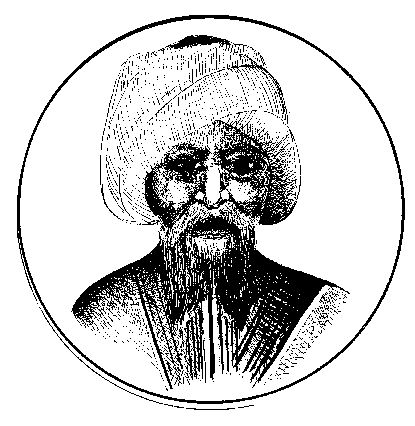
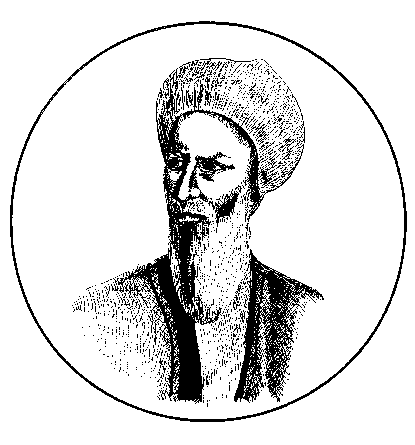
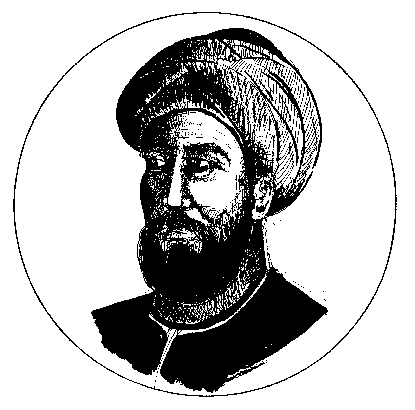
Jabir Ibn Haiyan (Geber) - Chemistry - (Died 803 C.E).

Al-Razi (Rhazes) - Medicine, Ophthalmology, Smallpox , Chemistry, Astronomy - (864-930)

Abu Al-Qasim Al-Zahravi (Albucasis) - Surgery, Medicine - (936-1013)

Ibn Al-Haitham (Alhazen) - Physics,Optics, Mathematics - (965-1040)

Ibn Sina (Avicenna) - Medicine, Philosophy, Mathematics, Astronomy - (986-1037)


sumber dari: pgssajkm.blogspot.com

Thursday, 26 September 2013

Si Geber dari Abad Pertengahan


Jabir


Jabir Ibnu Hayyan (750-803 M), yang lebih akrab dipanggil Si Geber dari Abad Pertengahan" juga dikenali sebagai "Bapak Ilmu Kimia Dunia”. Beliau yang nama penuhnya Abu Musa Jabir Ibnu Hayyan, telah berhasil menempatkan dirinya sebagai ilmuwan terkemuka sejak dia belajar kimia di Kufah (sekarang Iraq) di sekitar tahun 776 M yang silam. Beliau pernah berguru pada Barmaki Vizier pada zaman Khalifah Abbasiyah pimpinan Harun Ar-Rasyid.

Sumbangan terbesar beliau ialah dalam bidang ilmu kimia. Beliau cukup terkenal karena hasil penulisan yang melebihi  seratus risalah yang telah diabadikan sehingga kini. Terdapat sebanyak 22 risalah yang antaranya berkaitan dengan ilmu kimia. Beliaulah yang memperkenalkan model penelitian dengan cara eksperimen didunia ilmu kimia.

Jabir banyak mengabdikan dirinya dengan melakukan eksperimen dan pengembangan kaedah untuk mencapai kemajuan dalam bidang penyelidikan. Beliau mencurahkan daya upayanya pada proses pengembangan kaedah asas ilmu kimia dan kajian terhadap berbagai mekanisme.

Pencapaian praktis utama yang disumbangkan oleh beliau ialah penemuan bahan mineral dan asid, yang telah dipersiapkan pertama kali dalam penelitian tentang alembik (Anbique). Rekaannya terhadap alembik membuat proses penyulingan menjadi lebih mudah dan sistematik.

Antara beberapa penemuannya yang lain dalam bidang kimia, salah satunya ialah dalam penyediaan asid nitrik, hidroklorik, sitrik, dan tartarik. Penekanan Jabir dalam bidang eksperimen sistematik ini diketahui umum tidak ada duanya didunia.

Oleh sebab itulah, mengapa Jabir diberi kehormatan sebagai "Bapak Ilmu Kimia Modern" oleh rekan sejawatnya diseluruh dunia. Bahkan dalam tulisan Max Mayerhaff, disebutkan bahwa jika ingin mencari seluk-beluk perkembangan ilmu kimia di Eropa maka boleh dicari langsung pada karya-karya Jabir Ibnu Hayyan.

Tegasnya,  Jabir merupakan seorang pelopor dalam beberapa bidang pengembangan ilmu kimia terapan. Sumbangan beliau termasuk juga dalam pembangunan keluli, penyediaan bahan-bahan logam, bahan antikarat, tinta emas, penggunaan biji mangan dioksida untuk pembuatan kaca dan bahan pengering pakaian.
Sumbangan beliau juga dalam menyediakan pelapisan bahan anti air pada pakaian, serta campuran bahan cat. Selain itu, beliau juga mengembangkan teknik peleburan emas dengan menggunakan bahan aqua regia.
Ide eksperimen Jabir itu sekarang telah menjadi dasar untuk mengklasifikasikan unsur-unsur kimia, terutamanya pada bahan logam, bukan logam, dan penguraian bahan kimia. Beliau telah merumuskan tiga bentuk berbeda dari bahan kimia berdasarkan unsur-unsurnya:
  1. Cecair (spirit)
  2. Logam, seperti:  emas,  perak,  timah,  tembaga, dan besi.
  3. Bahan campuran, yang boleh ditukar menjadi serbuk.
Pada abad pertengahan, risalah-risalah Jabir dalam bidang ilmu kimia termasuk kitabnya yang masyhur, Kitab Al-Kimya dan Kitab Al-Sab'een, telah diterjemahkan ke bahasa Latin. Bahkan terjemahan Kitab Al-Kimya telah diterbitkan oleh orang Inggeris yang bernama Robert Chester pada tahun 1444, dengan judul The Book of the Composition of Alchemy.

Buku kedua, Kitab Al-Sab'een diterjemahkan juga oleh Gerard dari Cremona. Berthelot pula menerjemahkan  beberapa  buku beliau, yang antaranya Book of Kingdom, Book of the Balances, dan Book of Eastern Mercury.

Berikutnya pada tahun 1678, seorang berbangsa Inggris, yaitu Richard Russel menerjemahkan karya Jabir yang lain dengan judul Sum of Perfection. Berbeda dengan pengarang sebelumnya, Richardlah yang pertama kali menyebut Jabir dengan sebutan Geber. Dialah yang memuji Jabir sebagai seorang pendeta Arab dan juga ahli falsafah.

Buku ini kemudiannya menjadi sangat popular di Eropa selama beberapa abad lamanya dan telah memberi pengaruh yang cukup besar kepada evolusi ilmu kimia modern. Istilah alkali, pertama kali ditemukan oleh Jabir.


sumber dari: islam-agama-benar.blogspot.com

Saturday, 14 September 2013

Emerald Tablet


  • Also called The Secret of Hermes – by Hermes Trismegistus ("Hermes the Thrice-Greatest") 172 BCE
  • —A text purporting to reveal the secret of the primordial substance and its transmutations
  • —Translations - Arabic, the Latin, and Isaac Newton
  • Short – 13-14 lines
  • —Also attributed to Jabir ibn Hayyan
  • —Tablet became a mainstay of medieval and Renaissance alchemy

sumber dari: toxipedia.org

Beginnings of chemistry


An early experimental scientific method for chemistry began emerging among early Muslim chemists. The first and most influential was the 9th century chemist, Geber (Jabir ibn Hayyan), who is "considered by many to be the father of chemistry",[8][9][10][11] for introducing:
Jabir clearly recognized and proclaimed the importance of experimentation:
"The first essential in chemistry is that you should perform practical work and conduct experiments, for he who performs not practical work nor makes experiments will never attain the least degree of mastery."[13]
The historian of chemistry Erick John Holmyard gives credit to Jabir for developing alchemy into an experimental science and he writes that Jabir's importance to the history of chemistry is equal to that of Robert Boyle and Antoine Lavoisier.[14] The historian Paul Kraus, who had studied most of Jabir's extant works in Arabic and Latin, summarized the importance of Jabir ibn Hayyan to the history of chemistry by comparing his experimental and systematic works in chemistry with that of the allegorical and unintelligble works of the ancient Greek alchemists:[15]
“To form an idea of the historical place of Jabir’s alchemy and to tackle the problem of its sources, it is advisable to compare it with what remains to us of the alchemical literature in the Greek language. One knows in which miserable state this literature reached us. Collected by Byzantine scientists from the tenth century, the corpus of the Greek alchemists is a cluster of incoherent fragments, going back to all the times since the third century until the end of the Middle Ages.”
“The efforts of Berthelot and Ruelle to put a little order in this mass of literature led only to poor results, and the later researchers, among them in particular Mrs. Hammer-Jensen, Tannery, Lagercrantz , von Lippmann, Reitzenstein, Ruska, Bidez, Festugiere and others, could make clear only few points of detail…
The study of the Greek alchemists is not very encouraging. An even surface examination of the Greek texts shows that a very small part only was organized according to true experiments of laboratory: even the supposedly technical writings, in the state where we find them today, are unintelligible nonsense which refuses any interpretation.
It is different with Jabir’s alchemy. The relatively clear description of the processes and the alchemical apparatuses, the methodical classification of the substances, mark an experimental spirit which is extremely far away from the weird and odd esotericism of the Greek texts. The theory on which Jabir supports his operations is one of clearness and of an impressive unity. More than with the other Arab authors, one notes with him a balance between theoretical teaching and practical teaching, between the `ilm and the `amal. In vain one would seek in the Greek texts a work as systematic as that which is presented for example in the Book of Seventy.”
Jabir's teacher, Ja'far al-Sadiq, refuted Aristotle's theory of the four classical elements and discovered that each one is made up of different chemical elements:
"I wonder how a man like Aristotle could say that in the world there are only four elements - Earth, Water, Fire, and Air. The Earth is not an element. It contains many elements. Each metal, which is in the earth, is an element."[16]
Al-Sadiq also developed a particle theory, which he described as follows:
"The universe was born out of a tiny particle, which had two opposite poles. That particle produced an atom. In this way matter came into being. Then the matter diversified. This diversification was caused by the density or rarity of the atoms."[16]
Al-Sadiq also wrote a theory on the opacity and transparency of materials. He stated that materials which are solid and absorbent are opaque, and materials which are solid and repellent are more or less transparent. He also stated that opaque materials absorb heat.[16]
Al-Kindi, who was a chemist and an opponent of alchemy, was the first to refute the study of traditional alchemy and the theory of the transmutation of metals into more precious metals such as gold or silver.[17] Abū Rayhān al-Bīrūnī,[18] Avicenna[19] and Ibn Khaldun were also opponents of alchemy who refuted the theory of the transmutation of metals.
Another influential Muslim chemist was al-Razi (Rhazes), who in his Doubts about Galen, was the first to prove both Aristotle's theory of classical elements and Galen's theory of humorism wrong using an experimental method. He carried out an experiment which would upset these theories by inserting a liquid with a different temperature into a body resulting in an increase or decrease of bodily heat, which resembled the temperature of that particular fluid. Al-Razi noted particularly that a warm drink would heat up the body to a degree much higher than its own natural temperature, thus the drink would trigger a response from the body, rather than transferring only its own warmth or coldness to it. Al-Razi's chemical experiments further suggested other qualities of matter, such as "oiliness" and "sulfurousness", or inflammability and salinity, which were not readily explained by the traditional fire, water, earth and air division of elements.[20] Al-Razi was also the first to:
In the 13th century Nasīr al-Dīn al-Tūsī stated an early version of the law of conservation of mass, noting that a body of matter is able to change, but is not able to disappear.[21]
From the 12th century, the writings of Jabir, al-Kindi, al-Razi and Avicenna became widely known in Europe during the Arabic-Latin translation movement and later through the Latin writings of a pseudo-Geber, an anonymous alchemist born in 14th century Spain, who translated more of Jabir's books into Latin and wrote some of his own books under the pen name of "Geber".


sumber dari: thefullwiki.org